Measure the product as it will be packed
Use the finished product with its cap, pump, sleeve or other protruding parts in place. Record the largest dimensions in its intended orientation. If a set contains several products, list each item and explain whether they sit side by side, vertically or in separate compartments.
Label every measurement clearly
Write length × width × height and include the unit on your brief. Add a simple sketch or labelled photograph when the orientation could be misunderstood. Do not switch between inches and millimetres within the same specification without explicitly identifying the conversion.
Distinguish internal and external size
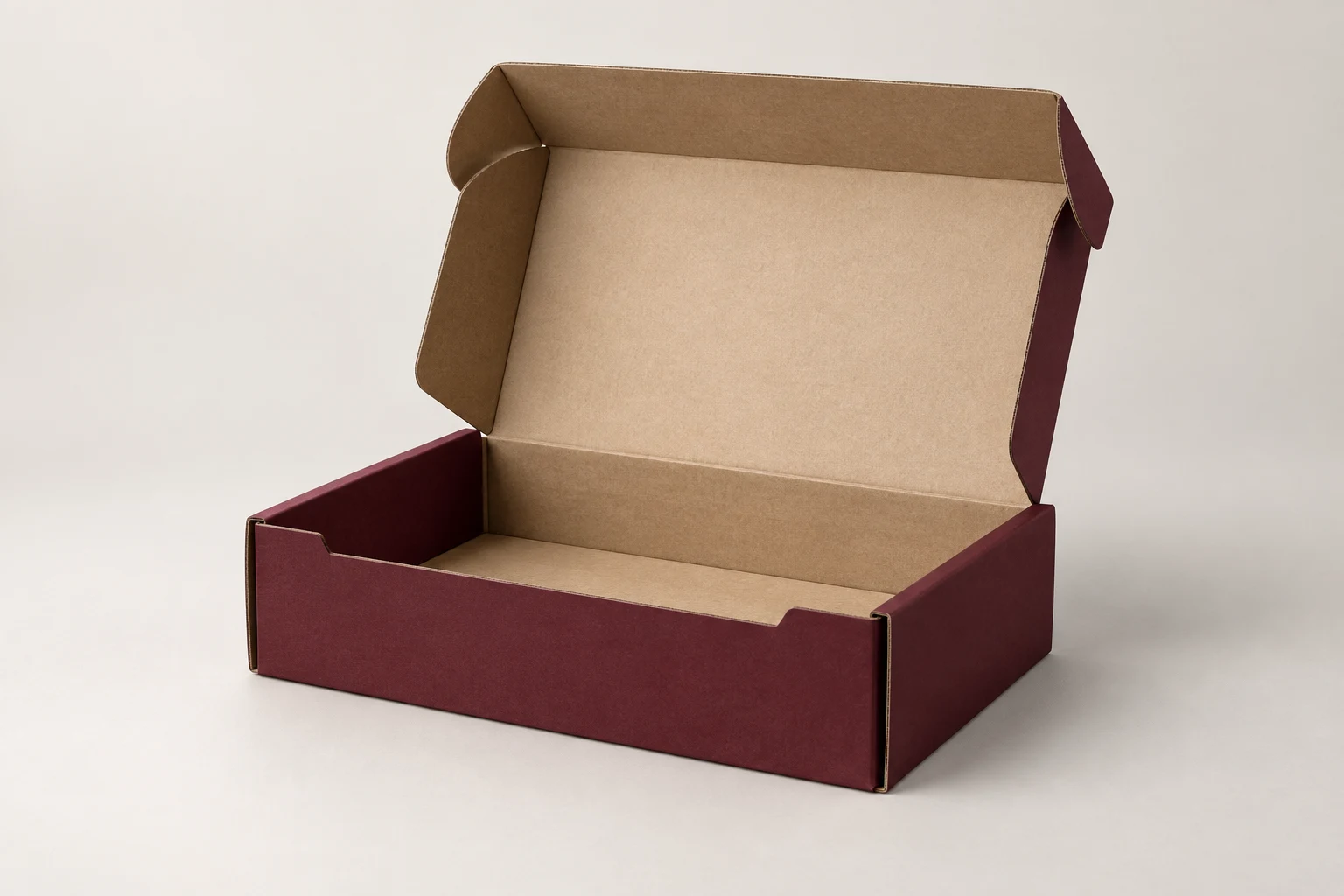
Internal dimensions describe the space available for the product and packing. External dimensions describe the finished outside of the box. Board thickness, construction and inserts influence the relationship between the two. If you already have a box, tell us which measurement you have supplied rather than assuming they are interchangeable.
Leave the fit allowance for discussion
An insert, wrap or protective layer uses space. The product also needs to go into and come out of the box comfortably. There is no single allowance that works for every product. Share the actual product size and the packing method so the fit can be developed, rather than adding an unexplained amount to each measurement.
Confirm the fit with a sample
Use the actual product to review the proposed packaging. Check that the lid closes naturally, the contents do not move excessively and the customer can remove the product. Record any changes before approving production. A clear dimensional brief makes this review more useful and avoids comparing quotes for different box sizes.
Ready to put your brief together?
Tell us about your product and we’ll help you discuss the next step.
Request a quote ↗